
Garage floor concrete in San Fernando CA - a slab built on firm, packed ground
Cracked or sunken garage floor? We dig out, pack the base and pour a new floor that's even underfoot and sheds water out the door.
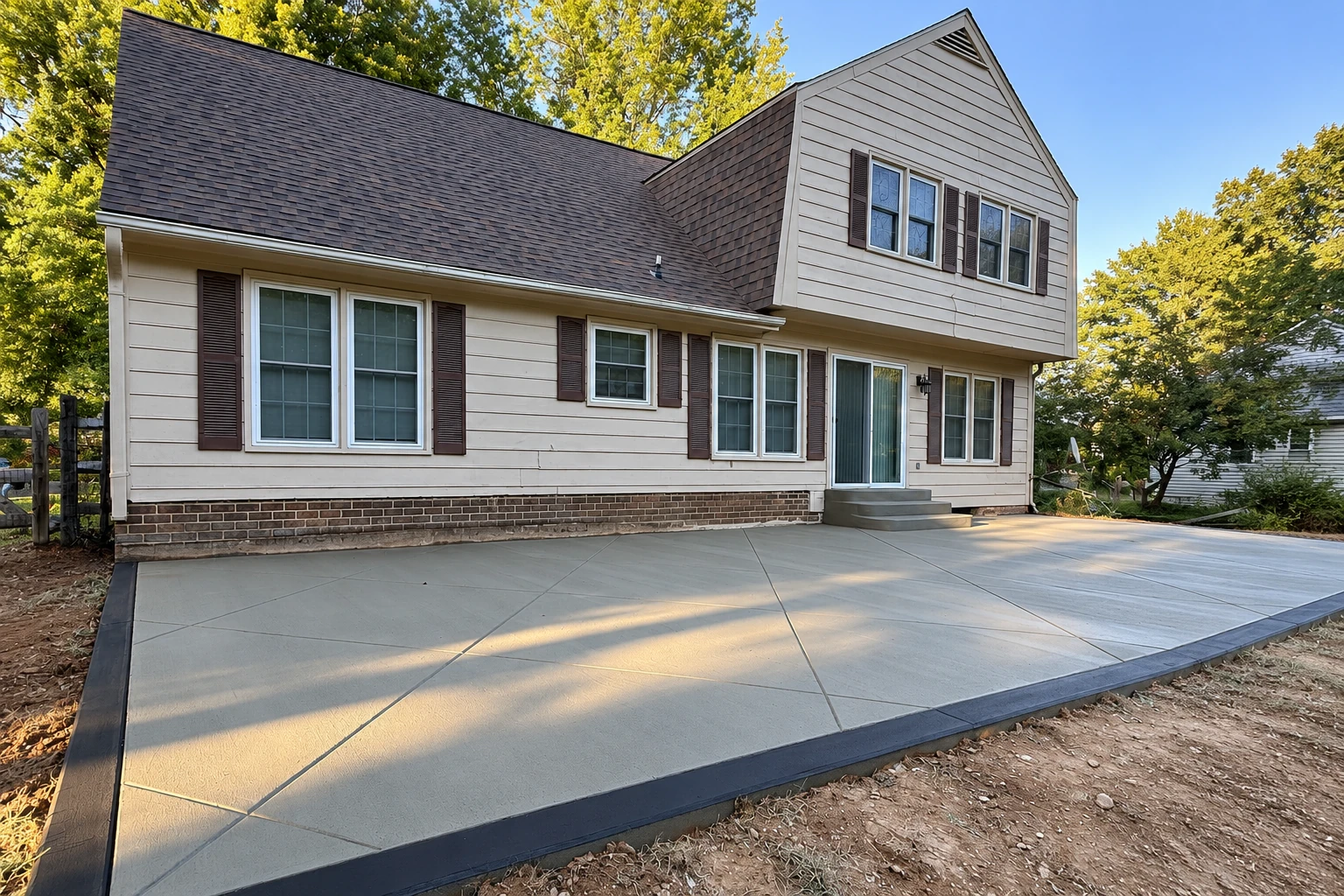
What goes into a new concrete garage floor?
We're based in San Fernando and build new concrete garage floors here and in nearby cities like Burbank, Glendale, Pasadena and Santa Clarita, digging out and packing the ground, then forming, pouring and finishing the slab your car and everything else sits on.
Most people call us when the old floor has cracked, dropped at one end or started holding water, or when they're fixing up a garage that never had a decent slab. The price mostly follows the size of the garage, whether old concrete has to come out first and how much work the ground needs, and the schedule turns on the weather, a permit if the job needs one, and the curing wait before you can use the floor. On a lot that slopes, the dirt beside the garage sometimes needs a concrete retaining wall too, and you'll get the details for yours in a written estimate once I've seen it.
How do you know your garage floor needs replacing?
Most garage floor calls start with something you've been stepping around for a while. Here's what usually tells us the slab or the ground under it needs work, and what it tends to mean.
Cracks that keep getting wider usually mean the ground under that part of the slab is moving.
One corner or section has dropped, which usually means the dirt underneath wasn't packed or has washed out.
Water pools in the middle of the floor or runs toward the house instead of out the garage door.
The surface is flaking, chipping or leaving a fine dust on your shoes, a sign of a weak top layer.
Paint or an old coating is peeling up in patches, often because moisture is rising through the concrete.
A raised edge or gap where the floor meets the driveway that catches your foot or your tire.
If water is running toward the house or a sunken edge is turning into a trip hazard, call us rather than wait, because the ground underneath usually keeps moving.
What happens when you call us about a garage floor?
Here's how a garage floor job runs with us, from your first call to the final walk-through, and where San Fernando's inspection schedule fits in.
Call or send a message
Call (818) 806-6170 or use the form, and I come out myself to look at the garage, measure it and hear what you have in mind. It helps to know what you park, store or work on in there, since that shapes how we build it.
Go over your written estimate
You get a written estimate that spells out the prep, the work and the cleanup, so you can see exactly what you're paying for before anything gets torn out. Nothing is hidden in a lump sum, including how we'll handle the ground underneath.
Set a date and permit
Once you're ready we set a date, and when the job calls for a permit we pull it and work through plan check and inspections with the city's Building and Safety Division, which is also where you can ask whether your project needs one. San Fernando inspects Monday through Thursday, 8:30 to 11:30 in the morning, so we plan the pour around those mornings.
Pour, cure and walk through
Our crew does the work with me on site, and we keep the new floor covered and protected while it cures instead of letting it dry out on its own. When it's done, we walk the finished floor together before we pack up.
Get a free estimate for your new garage floor
Send the form and we'll reply within one business day to set a time for me to come out. The estimate is free, done on site and comes with no obligation.
- Call
- (818) 806-6170
- Hours
- Mon–Sun: 8 AM–9 PM
Base, finish and layout for a garage slab
Back when I was a helper hauling bags and cleaning tools, the finishers I learned from always said a floor is only as good as the dirt under it, and I still believe that. The base is buried on the first day, so it's the first thing people want to trim from a budget. I'd rather spend less on the finish than skimp there, because a nice-looking top over soft ground still settles and cracks.
For the surface, most garage floors get a smooth troweled finish or a light broom finish, a fine brushed texture that gives shoes and tires some grip when the floor's wet. If you're planning a coating, we ready the top for that instead. Where the job calls for it, we set rebar, steel bars that help hold the slab together, and if you'd like color or a pattern, take a look at our decorative concrete work.
Every garage meets the house and the driveway a little differently. An attached garage has to tie in at the door to the house, and the floor usually falls gently toward the big door so water off a wet car runs out instead of back toward your living space. On any lot, we check where the yard's water goes before we form anything, because a slab that sends water the wrong way causes trouble for a long time.
Garage floor questions we hear in San Fernando
Will my new concrete garage floor crack?
It may, because nobody can stop concrete from cracking entirely, but properly planned control joints, grooves cut into the slab so it cracks along a line we chose, keep those cracks controlled and small. It's fair to ask any contractor where the joints will go, and we plan that layout before the pour. Wire mesh won't prevent cracking either, though it tends to keep cracks and joints from opening up.
How do you prepare the ground under a garage floor slab?
We dig out and pack the ground and the base so the whole slab has even support, and the base needs to drain well so water doesn't sit under the floor. A good bid should tell you how the crew will compact the base and handle drainage, and ours spells that out in writing.
How long does new concrete need to cure in hot weather?
National guidance for hot weather says curing should start as soon as finishing is done and go on for at least 3 days. Curing just means keeping water from evaporating out of the concrete, so plan on the slab sitting under wet burlap and plastic, a curing compound or water for those days. The same guidance says crews should place and finish outside the hottest part of the day when possible, without sprinkling water on the surface.
Does a concrete contractor need a license in California?
Yes, the California Contractors State License Board requires a license to build or alter a structure when the job needs a building permit, uses extra workers or totals $1,000 or more. Flat concrete work like a garage floor falls under the board's C-8 Concrete Contractor class, so you can ask any contractor which class they hold. We're licensed and insured.
How much does a new concrete garage floor cost in San Fernando?
The cost comes down mostly to your garage's size, whether the old slab has to be broken out and hauled away, and how much digging and packing the ground needs. A coating plan, a decorative finish or a garage that's hard to reach with equipment can add to it, while a cleared-out, easy-to-reach space keeps it down. Your written estimate lays out the prep, the work and the cleanup once I've seen the job.
How do I plan for an epoxy or other coating on a new garage floor?
Tell your contractor before the pour, because water vapor rising through a slab can make moisture-sensitive coatings and adhesives fail. When that happens the finish can lift off in layers, warp or discolor and leave trip hazards, so when we know a coating is coming, we get the slab ready differently from the start.
Other concrete work around your garage
Decorative concrete
Worth a look if you want color, a pattern or a smoother, nicer-looking face on the concrete around your garage instead of plain gray.
Concrete retaining walls
When your garage or driveway sits on a sloped lot, a wall holding back the hillside keeps soil and runoff from creeping toward your new floor.
Get your garage floor on our schedule
We're open every day from 8 AM to 9 PM, so call (818) 806-6170 or send the form whenever it suits you, and feel free to call back with questions after the floor's done too.
Mon–Sun: 8 AM–9 PM